The Montane Winter Spine Race is the highlight of an ultrarunner’s calendar. Whether traversing the unforgiving slopes on the Pennine Way or sitting and watching the dots slowly drive from Edale to Kirk Yetholm, it is a race that encapsulates the brilliance of long-distance running.
Kim Collison is a staple within the ultrarunning community, and it has a previous race completion list, including the Northern Traverse, Bob Graham Round, and the Ultra-Trail du Mont Blanc (UTMB).
His most recent win includes his completion and first-place position at the Montane Winter Spine Race.
The Montane Winter Spine Race (known colloquially as the Winter Spine) is a 268-mile race that is a monumental highlight of the winter running calendar. Self-defined as ‘Britain’s Most Brutal,’ it traverses the length of the Pennine Way, beginning in Edale and finishing in Kirk Yetholm, climbing over 10,000m of elevation.
Kim Collison first became aware of the race around 10 years ago. However, it wasn’t initially on his radar, as he thought, ‘Why would anyone want to do that?’
Only after listening to Montane Spine Race 2019 winner Sabrina Verjee speak on a podcast did he decide to try the race. However, it wasn’t all plain sailing, as he DNF’d the race three years in a row. This only spurred him on to try again next year.
“It’s an accumulation of several years of building up different races, successes, and experiences of doing hard things and getting the reward you get when you complete hard challenges.
“I guess then failure after failure just keeps me intrigued, keeps me drawing me back.”
Collison explained that his previous attempts at the race, especially the 2024 race, gave him “huge confidence” as “95% of what I did went really, really, really well.”
Having this mindset and figuring out the final pieces of the jigsaw meant he could take the start line in January this year and not only finish but prosper in first place in the Men’s/Open race.
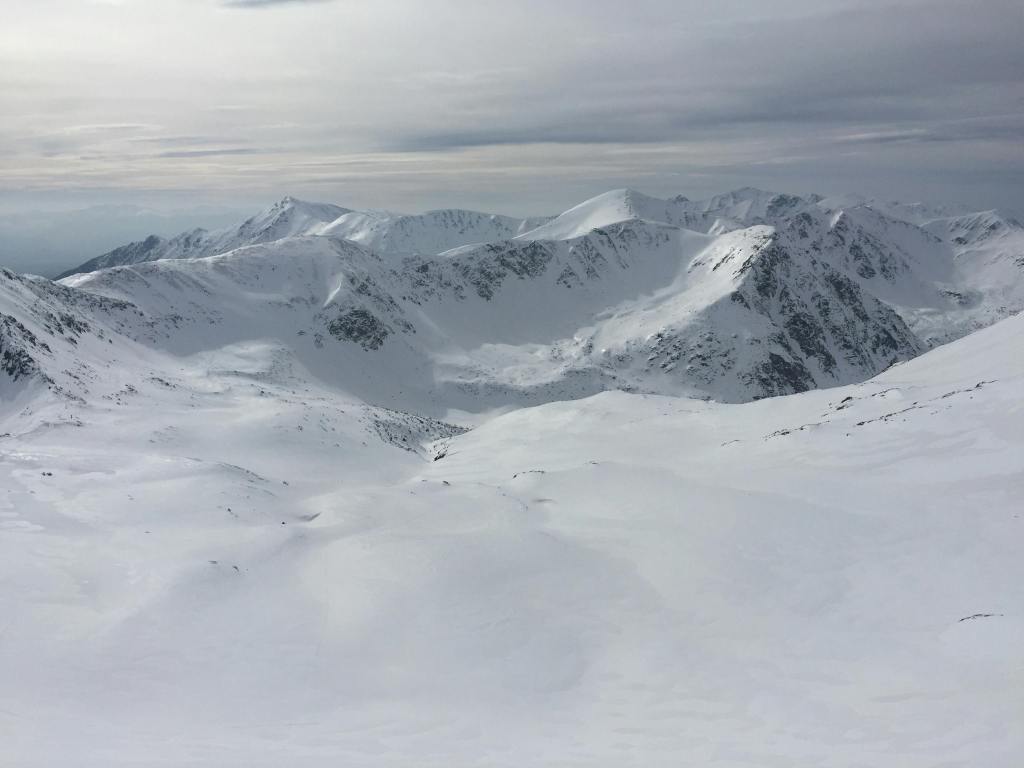
The Montane Winter Spine Race is notorious for its challenging weather, as it takes place in January. However, in the days leading up to the race, Britain experienced a winter chill that spread snow across much of the course. This added a whole new layer of challenge to the race, as freezing temperatures prevailed throughout.
“I definitely had to make a mental adjustment before the race. There’s always hope that you will get last year’s conditions and you can challenge the fast times at the top end.
“It’s not a race for a time anymore, but a time to just enjoy the race and adjust expectations of when you get to specific landmarks. I didn’t want to pressure myself to be as fast as I was last year and accept that I might be a lot slower.”
Nevertheless, the unprecedented weather conditions had some positive aspects. Kim reminisced about the “awe-inspiring sunrise” over Kinder Scout. He explained that the snow was reasonable until Hebden, when it deepened, and Kim had to “wade” through it.
“There were no easy miles. And that toll definitely started to mount up in that second leg. By the time I reached Hawes, I felt more work than last year, even though I was two hours slower.”
Collison travelled with the leading pack almost from the offset, traversing most of the first leg with the 2020 winner, former men’s course record holder John Kelly (USA), and Spine Race regular Eugeni Roselló Solé (Spain). Roselló Solé won the race in 2013 and was second in 2017.
Collison took the lead at the second checkpoint in Hawes (104 miles).
“I knew that it probably would be a group at the start. I was a little surprised that it was down to just three of us quite early on.”
He explained that in those first 100 miles, John Kelly, who is well known for holding many course records, including three-course finishes at the Barkley Marathons, was pushing the pace for the trio.
“So I’m not that surprised that it did break down early, but it definitely helped when a few of you are working together, sharing some of the miles and passing some of the time, just in that shared company.
“Leading the race, it felt then that I had the chance to make my own strategy.”
One of Collison’s personal goals was to try sleeping at Hawes and then making it to checkpoint three, as he had failed to do so in previous attempts. After resting for half an hour, he explained that this gave him “extra confidence” to tackle the next push to checkpoint three (Hardraw). Arriving at this checkpoint, he explained that his legs were in a bad way from trekking through the snow. However, even after spending four hours there, he left still in first place.
“But that was brilliant because I knew I was rested and still in the lead. It gave me further confidence that in the long game, I would still not fall apart in the race.”
It was near hut one (246 miles) with an eight-mile lead that Collison thought the win was relatively close: “I think the euphoria of actually the realisation that I was going to do it, I was going to finish, I was going to win it, was probably somewhere halfway between hut one and hut two (255 miles).
“It was just a real switch in my mindset, well-being, and motivation. Suddenly, I was determined to race hard to the finish and give my everything to enjoy the moment. Four years of hard work suddenly came out in those three hours, and I literally did fly.”
Collison described his motivation here as in the shape of Jasmin Paris’s “ghost”, an allegory for her 2019 record time, which became his new goal in these final stages of the race: “It made the last three hours fun.”
Kim Collison arrived at Kirk Yetholm and kissed the stone wall at 82:46:32, celebrating years of exceptional hard work and determination.
He described his recovery as “very, very tough” as almost immediately his feet ballooned, and he began to feel the aches and pains within his joints and ligaments.
“I’m still a little bit not caught up on sleep, but it’s now definitely turned the corner, and I’m feeling motivated again to look forward to new things.”
Collison has a plethora of exciting races to look forward to this season, including the UTS 100km and the Bighorn 100 in the USA. His final hope is a place at the Tor De Geants in September.
 EverUltra
Leave a comment